



Why Our Coffee Is Still $19.95, Even as Coffee Hit a 50-Year High

The Same Price for Five Years, Through the Worst Coffee Shock in 50 Years
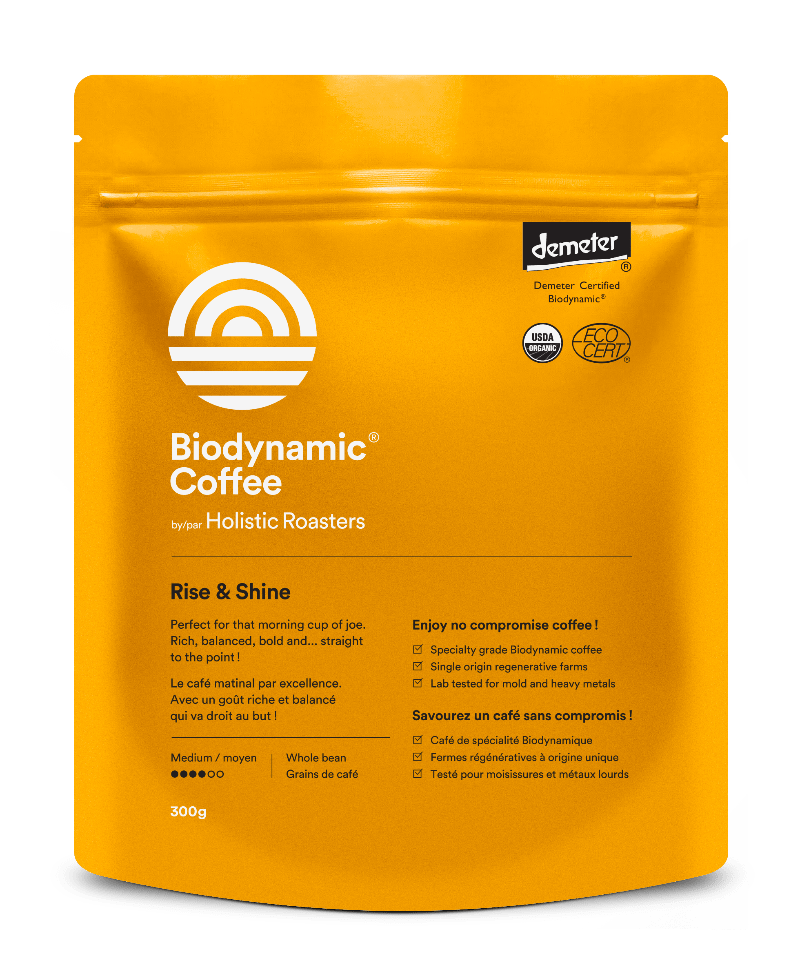
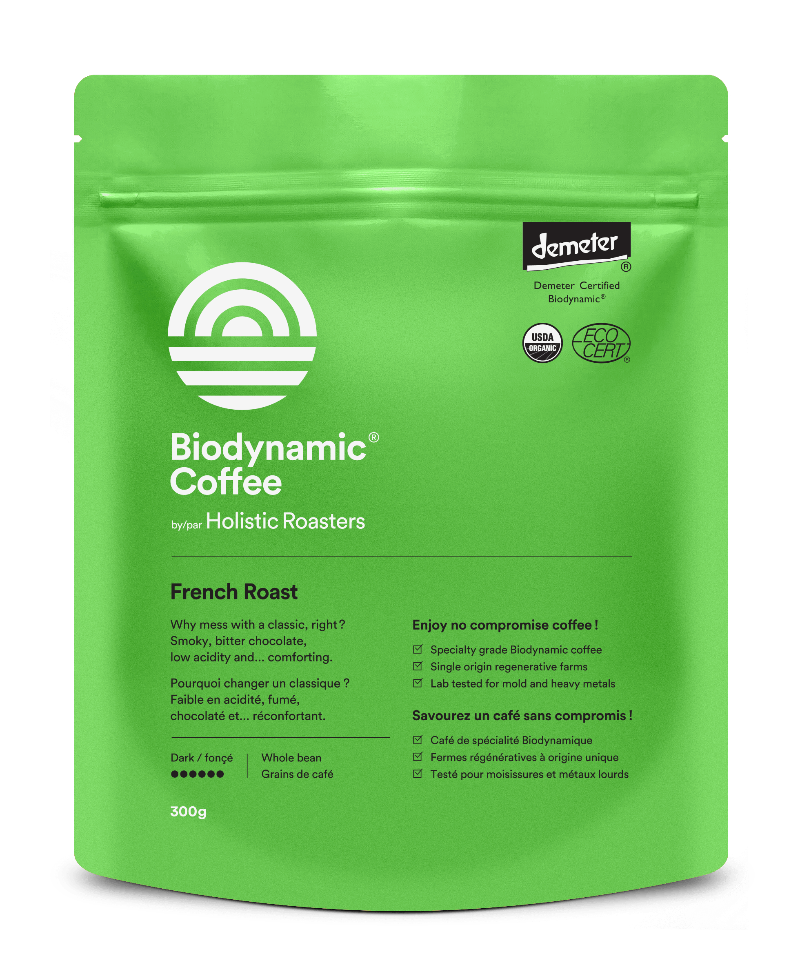
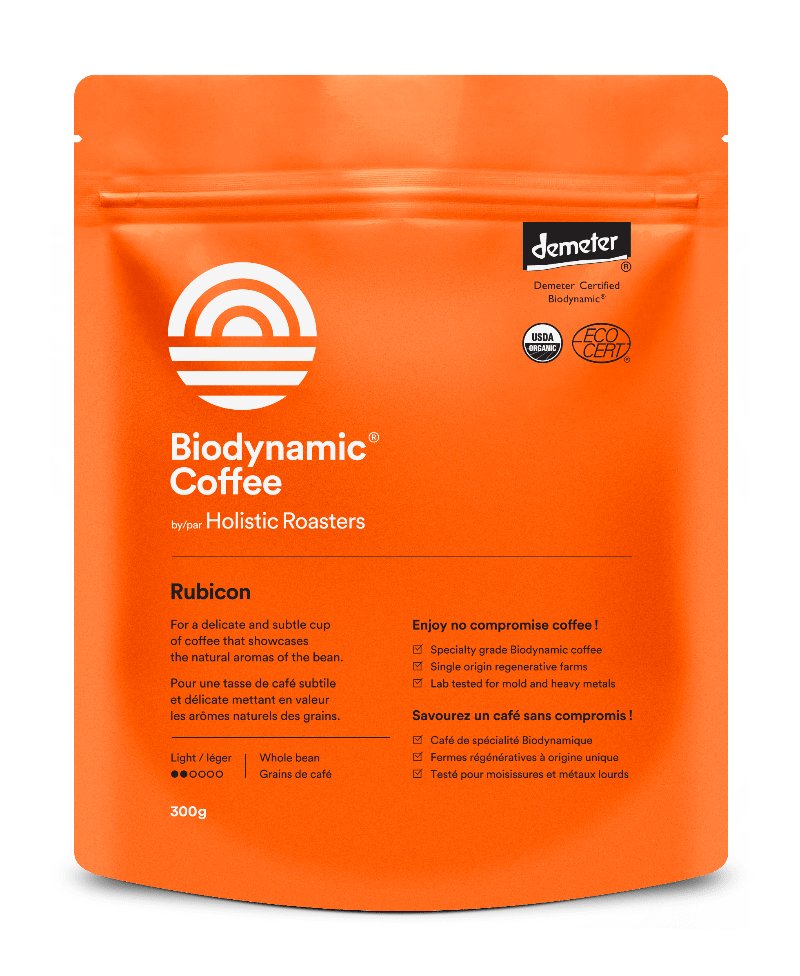
A 300g bag of our Biodynamic coffee costs $19.95. It cost exactly the same in 2021, the last time we changed anything about it, when we moved to a slightly smaller 300g bag. Since then, nothing has moved: same price, same size. In between, the price of coffee did something it had not done in half a century.

The Short Version
We have not changed our price or our bag since 2021, and we held that line straight through 2025, when the global price of green coffee hit a 50-year record. We could do that for three structural reasons: our Biodynamic farms are insulated from the synthetic-input costs that inflated hardest, our direct relationships with two partner farms keep us off the daily commodity market, and we grew efficient enough to absorb the rest. When green coffee did get more expensive, we paid our farms the fair market price and absorbed the increase ourselves rather than passing it to you.
What Happened to Coffee Prices
If your coffee got more expensive over the last few years, you were not imagining it. Most roasters raised prices, and they had good reason to.
In early 2025, the benchmark price for green Arabica coffee climbed to roughly $4.41 a pound, more than double where it sat a year earlier and the highest level in about 50 years.1 The cause was not a single event. Repeated droughts in Brazil hurt the flowering of Arabica trees, while heat and drought cut Vietnam's robusta harvest for several seasons running.1 A tight market got tighter, and prices ran.
That was on top of everything else a coffee farm and a roaster had already lived through. Synthetic fertilizer prices roughly tripled after the 2021 to 2022 energy and supply shock.2 Diesel, freight, and packaging all climbed. For most of the industry, raising prices was not greed. It was survival.
So the honest question is not "why did coffee get expensive." It is "how did your price stay the same?" Here is the real answer, in three parts.
1. A Biodynamic Farm Is Insulated From Input Inflation
Most of what inflated for conventional coffee farms simply is not on our farms' books. Biodynamic farming is a closed-loop system: fertility comes from compost, cover crops, and the farm's own ecosystem rather than from a bag of synthetic fertilizer. There are no synthetic pesticides, herbicides, or fungicides to buy, because the standard prohibits them.
That matters more than it sounds. Synthetic fertilizer was the single input that inflated hardest, roughly tripling at its 2022 peak.2 A conventional farm felt that directly. A Biodynamic farm did not, because it never bought it in the first place. Our coffee is also hand-picked rather than machine-harvested, which trades fuel and heavy equipment for skilled labor and care.
The quiet advantage
Regenerative and Biodynamic farming is usually described in terms of soil health and clean coffee. It has a second, less obvious benefit: a farm that makes its own fertility has a far more stable cost base than one that buys it. When the price of synthetic inputs spikes, that stability is worth a great deal.
There is a deeper kind of protection here as well. The 2025 spike was set off by weather, and regenerative and Biodynamic farms are built to weather exactly those shocks. Soil rich in organic matter holds far more water, which carries a crop through dry spells and drains better in heavy rain, while the shade trees and biodiversity of a healthy farm soften temperature extremes. Research on coffee specifically points to this combination of soil, water, and crop management as central to climate resilience.3 A farm that holds a steadier harvest through a difficult season is, in the end, part of what holds a price steady too.
2. We're Not on the Commodity Rollercoaster
Most coffee is bought and sold against the commodity futures market, the same market that doubled into 2025. We are not. We buy directly from two partner farms, and we commit to their harvests in advance.
🇭🇳 18 Conejo, Honduras
A renowned, women-led family farm run by the Zelaya Contreras family in the Marcala region, and the first certified Biodynamic coffee farm in Central America. Our relationship with them is not new: in 2016, meeting the Zelaya Contreras family on their farm is what directly inspired us to launch Holistic Roasters.
🇵🇪 La Chacra D'dago, Peru
The first Demeter-certified Biodynamic coffee farm in Peru, now also a certified B Corp, and the origin of the very first coffee we ever sold. A relationship we have carried from the beginning.
These are not suppliers we found on a spreadsheet. Holistic Roasters exists because of these farms. You can read more about both in our deep dive on what lab testing reveals about the cleanest coffee brands. A relationship that goes back to the founding of the company behaves very differently from a contract signed last quarter: it is built to last, on both sides, which is exactly the kind of foundation a stable price needs.
We work with these two farms on purpose, because their harvest seasons are complementary. When one farm's crop is freshly picked, we are roasting it; by the time that supply winds down, the other farm's fresh harvest is coming in. The result is that you are drinking recently harvested coffee rather than from green beans that sat in a warehouse for a year. It is the same reason freshness shows up everywhere in how we work, from sourcing to our roast-and-rest timing.
Because we contract those harvests ahead of time rather than buying on the spot market, our cost is something we can plan around. We do that alongside RGC, a family-owned green-coffee importer we have worked with for years, whose job is to navigate the commodity market so we can lock in our costs well in advance. That predictability is what a forward relationship buys you. It does not make us immune to the price of coffee, but it takes us off the daily rollercoaster, and it gives us room to make a deliberate choice when costs do rise. Which brings us to the part that matters most.
3. When Costs Rose, We Absorbed Them
Because we buy directly from our farms rather than on the commodity market, the price increases we faced were modest, not the doubling that hit the open market. They reflected fair market value for the people who grow our coffee, and they rose as they should have. We paid those modest increases in full and absorbed them ourselves rather than passing them on to you or squeezing the farms to protect our margin. Holding your price flat was a choice we made, not a discount we extracted from a farmer.
We could afford that choice because we got more efficient at the same time. Over 2025, we nearly doubled the number of orders we fulfill each month while adding only about a third more labor hours, a productivity gain of more than 50%. Growing into that kind of operational scale is undramatic work, but it is what created the headroom to keep $19.95 at $19.95 while costs around us went up.
What This Means for You
It means the $19.95 you pay buys the same thing it bought in 2021, and arguably more. Every harvest is still third-party lab tested for mycotoxins, heavy metals, and contaminants. It is still Demeter certified Biodynamic, still hand-picked, still freshly harvested from farms we know by name. None of that was quietly traded away to hold the price.
We held it because the way we are built let us, and because we decided that a clean, fairly sourced cup at a price you can count on is the point of the whole exercise.
☕ The same price, the same promise
Demeter certified Biodynamic. Lab tested every harvest. Freshly harvested from partner farms in Honduras and Peru. Still $19.95.
Shop Biodynamic Coffee
References
- Perfect Daily Grind. (2025). "Arabica futures are over US $4.30/lb: It's a new era for coffee." perfectdailygrind.com
- World Bank Commodity Markets Outlook (fertilizer price index, 2021 to 2022 peak following the energy and supply shock). worldbank.org/commodity-markets
- "Opportunities for enhancing the climate resilience of coffee production through improved crop, soil and water management." Agroecology and Sustainable Food Systems (2023). doi: 10.1080/21683565.2023.2225438
Price history reflects the standard retail single-bag price of our current Biodynamic coffee line and can be independently checked against archived versions of this website.