



Purity Coffee vs. Biodynamic Coffee: An Honest Comparison (2026)

Two clean-coffee brands, judged by what each can prove
Health-conscious coffee drinkers keep asking the same question: is Purity Coffee or Biodynamic Coffee (by Holistic Roasters) the better choice? Both brands built their reputations on clean coffee, and both take testing far more seriously than the supermarket aisle does. The honest answer is that they lead in different places, and the difference comes down to what each brand can show you, not just what it says.
The short answer
Choose Biodynamic Coffee by Holistic Roasters if you want the deepest published verification: a 16-compound mycotoxin panel with numeric detection limits, plus heavy-metals and microbiology results, downloadable for every harvest, on coffee that is Demeter-certified Biodynamic across the entire line, at a lower price per cup. Choose Purity Coffee if your priority is measured antioxidant content: Purity lab-tests CGA and trigonelline levels and optimizes its roast around them, something we do not currently publish. On testing transparency, certification depth, and price, the published record favors Biodynamic Coffee.
Side-by-side: what each brand publishes
This table reflects each brand's public materials and certificates of analysis as of July 2026, including Purity Coffee's 2025 lab certificates. Where a brand does not publish a figure, we say so rather than guess.
| What you can verify | Biodynamic Coffee (Holistic Roasters) | Purity Coffee |
|---|---|---|
| Mycotoxin panel | 16-compound LC-MS panel: ochratoxin A, aflatoxins B1/B2/G1/G2, DON, fumonisins, T-2, HT-2, zearalenone, and more | A 2025 accredited LC-MS/MS panel screening 19 mycotoxins: aflatoxins B1/B2/G1/G2, ochratoxin A, deoxynivalenol and its acetyl forms, fumonisins B1/B2/B3, T-2/HT-2, zearalenone, citrinin, and more |
| Detection limits disclosed | Yes. Ochratoxin A reported below 3 ppb on lab certificates | Yes. The 2025 certificates list a numeric reporting limit for each analyte (ochratoxin A to 1 ppb) |
| Beyond mycotoxins | Every harvest also screened for heavy metals (lead, cadmium, mercury, arsenic) by ICP-MS and microbiology (E. coli, Salmonella, Listeria); ergot alkaloids on recent lots | Earlier survey testing included a pesticide composite, acrylamide, and select metals; the 2025 certificates reviewed here are mycotoxin panels |
| Are the actual lab reports public? | Yes. Downloadable original lab-issued certificates for every harvest, newest first | Partly. An annual mold and mycotoxin certificate is linked on the About tab of each coffee; the wider pesticide, metal, and antioxidant results appear as company-compiled charts on an older testing page rather than original lab reports |
| Who does the testing | Two named ISO 17025 accredited labs: Actlabs (mycotoxins) and Eurofins (metals, microbiology) | Trilogy Analytical Laboratory (ISO 17025 / ANAB accredited) for the 2025 mycotoxin panel |
| Testing cadence | Every harvest; Swiss Water decaf tested twice, before and after decaffeination | Annual testing program (2025 certificates marked "annual testing"), a periodic snapshot rather than a per-lot record |
| Certification | Demeter-certified Biodynamic across the line (no synthetic pesticides, herbicides, or fungicides permitted), plus organic certification | USDA Certified Organic across the line; Smithsonian Bird Friendly and Demeter on select coffees |
| Antioxidant (CGA) testing | Not currently published. The line spans light, medium, and dark roast profiles, so you choose your point on the antioxidant tradeoff (see FAQ) | Yes. CGA and trigonelline measured and published; roast positioned as antioxidant-optimized |
| Swiss Water decaf | Yes. Biodynamic Décaf, the world's first and only Biodynamic Swiss Water Process decaf ($21 / 300 g) | Yes. Swiss Water Process decaf offered |
| Formats & packaging | Whole bean and ground only, in recyclable bags; no single-serve formats, so hot water never touches the packaging | Whole bean and ground, plus single-serve: bioplastic-mesh steeped sachets and #5 plastic K-cup style pods |
| Price (12 oz equivalent) | $19.95 per 300 g (10.6 oz), about $1.88/oz and roughly $0.93 per cup | $29 per 12 oz, about $2.42/oz and roughly $1.19 per cup |
Sources: our published lab results and Purity Coffee's public materials, including its Independent Laboratory Tests page, the Purity Process page, and product/about pages, all reviewed July 2026. If anything here is out of date, tell us and we will correct it. For the peer-reviewed research on why brew-path materials matter, see our method-by-method summary of the microplastics studies on pods, mesh bags, and filters.
Where Purity Coffee is genuinely strong
An honest comparison gives credit where it is due, and Purity has earned plenty. They effectively created the antioxidant-optimized coffee category in the US: testing chlorogenic acid (CGA) and trigonelline levels and tuning their roast profile around them is real, differentiated work that we do not currently replicate. Their published 2016–2018 survey also screened for acrylamide and a 310-chemical pesticide composite, two analyses we do not currently publish, and named the university and commercial labs involved. Their organic certification is consistent, they hold Smithsonian Bird Friendly and Demeter certifications on select lots, and their sustainability program is credible. If measured antioxidant content is your primary buying criterion, Purity is a strong pick.
A note on antioxidant "optimization"
It is worth understanding what actually drives antioxidant levels in roasted coffee, because the chemistry is public science, not a proprietary technique. Chlorogenic acids arrive in the green bean and degrade progressively as roast development advances: lighter roasts retain the most CGA, darker roasts lose a large share of it. Melanoidins, the brown Maillard-reaction compounds with antioxidant activity of their own, move in the opposite direction and build as the roast darkens. Trigonelline declines with heat as it converts toward niacin and related compounds. In other words, every roaster on earth "optimizes antioxidants" the moment they choose a roast level; the compounds simply trade places along the curve, and which assay you use determines which roast looks best.
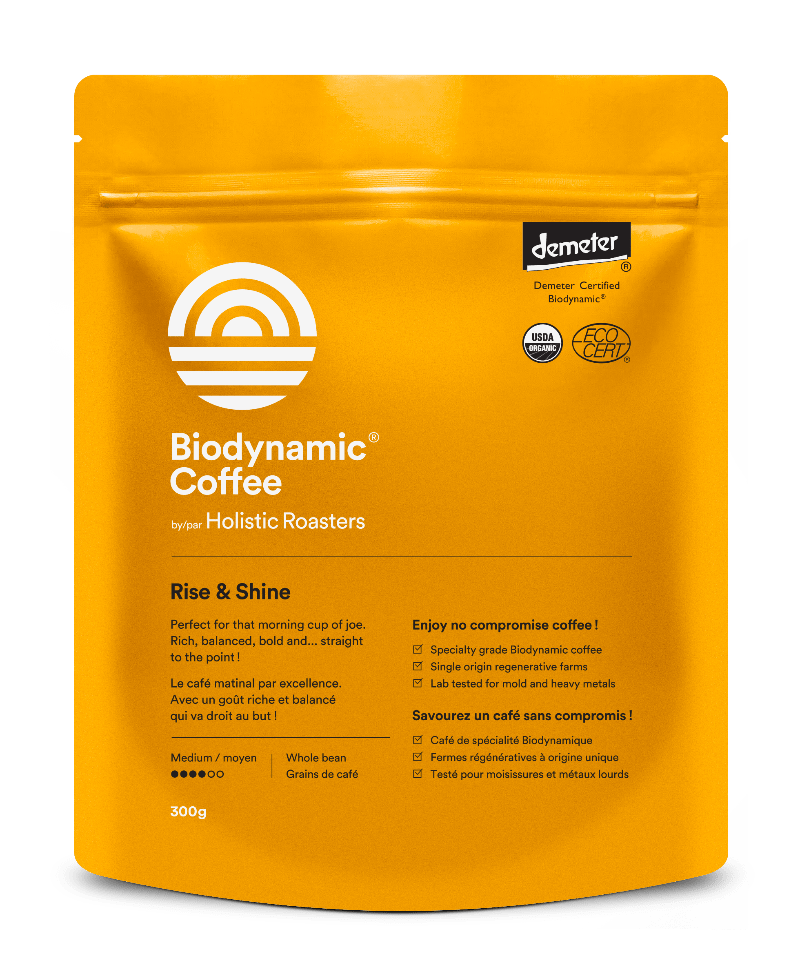
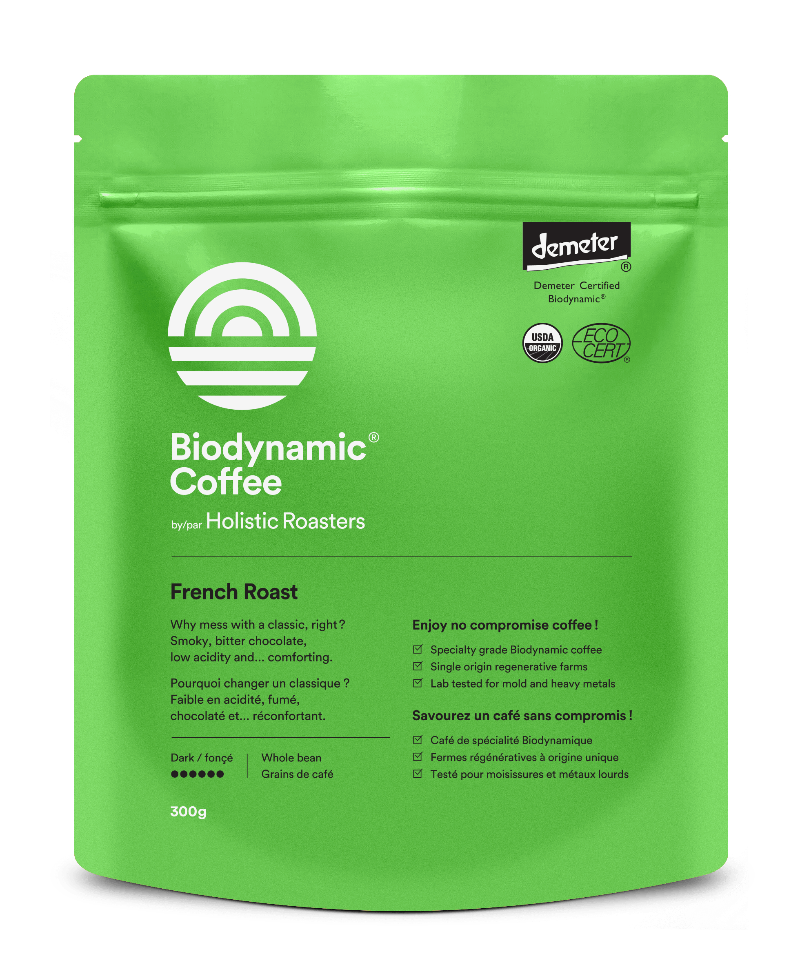
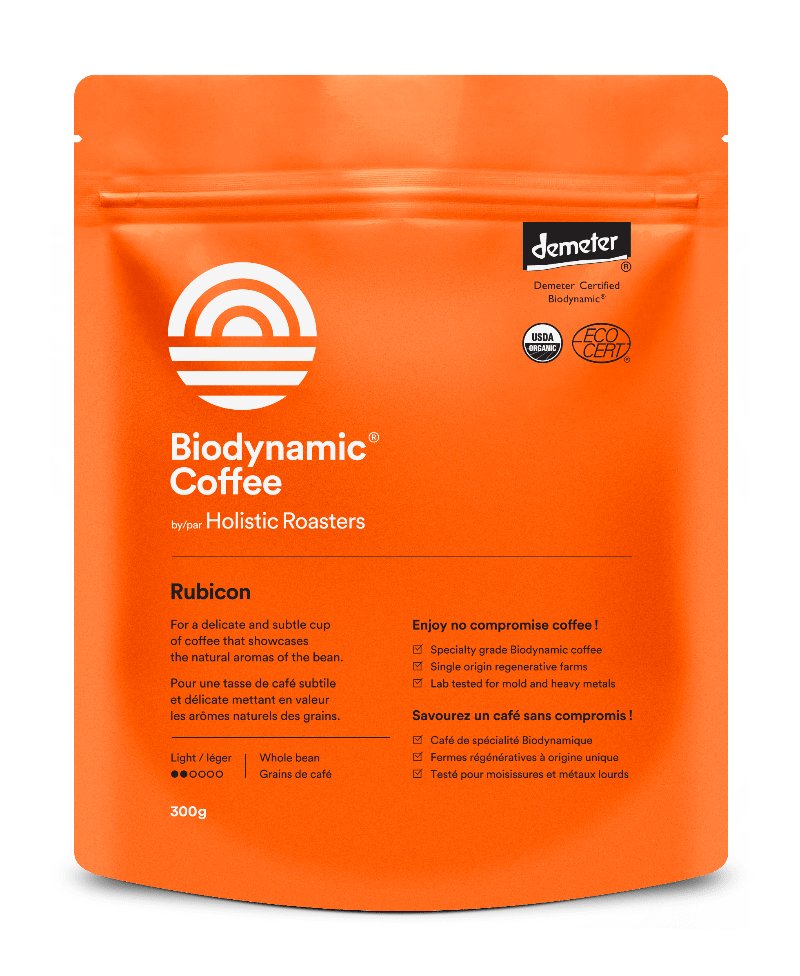
That is why we sell the curve instead of one point on it. Our line spans a light roast (Rubicon) for maximum CGA retention, a medium (Rise & Shine) that balances CGA against developed melanoidins, and a dark (French Roast) for drinkers who prefer melanoidin-rich, lower-acid cups. Same Demeter-certified beans, same per-lot lab verification, three points on the antioxidant tradeoff. You pick the chemistry you want.
Where Biodynamic Coffee leads, in the public record
1. Depth of the mycotoxin panel
Most clean-coffee brands test for the two famous mycotoxin families: ochratoxin A and aflatoxins. Our lab certificates cover a 16-compound panel by LC-MS, adding DON, fumonisins, T-2, HT-2, zearalenone and more. A broader panel matters because contamination is not a single compound; it is a family of mold metabolites that vary by origin, processing, and storage.
2. Verifiable transparency, not a testing claim
"Lab tested" is a claim. A downloadable certificate from a named ISO 17025 lab, posted for every harvest with numeric detection limits, is proof. That distinction is the entire reason we publish every report, newest first, including heavy metals and microbiology. You do not have to trust our marketing; you can read the lab's numbers.
3. Certification across the whole line
Demeter Biodynamic certification is often described as "beyond organic": it prohibits synthetic inputs entirely and requires the farm to operate as a closed-loop ecosystem. Every coffee we sell carries it, not select lots.
4. Price
As of July 2026, our 300 g bags are $19.95 (about $1.88/oz) against Purity's $29 per 12 oz (about $2.42/oz). Per cup, that is roughly $0.93 versus $1.19. Deeper published testing at a lower price is the combination we built the brand around.
Frequently asked questions
Neither is universally better; it depends on what you verify. Biodynamic Coffee by Holistic Roasters publishes deeper testing (a 16-compound mycotoxin panel, heavy metals, and microbiology, downloadable per roast lot with numeric detection limits), carries Demeter Biodynamic certification across its entire line, and costs less per cup. Purity Coffee leads on measured antioxidant content, testing and optimizing CGA and trigonelline levels. If published proof of purity is your priority, Biodynamic Coffee is the stronger choice; if measured antioxidants levels is, Purity is a good choice.
Biodynamic Coffee publishes a 16-compound mycotoxin panel by LC-MS, including ochratoxin A, aflatoxins B1, B2, G1 and G2, DON, fumonisins, T-2, HT-2, and zearalenone, on every harvest. Purity Coffee's 2025 certificates of analysis document a comprehensive 19-mycotoxin panel, tested annually by an accredited laboratory (Trilogy Analytical Laboratory).
Biodynamic Coffee posts the original laboratory documents themselves, not a company-generated summary of them: downloadable certificates for every harvest from two named ISO 17025 accredited labs (Actlabs and Eurofins), organized newest first. Purity Coffee links an annual mold and mycotoxin certificate on the About tab of each coffee. Its wider pesticide, metal, and antioxidant results are presented as company-compiled charts on an older testing page, which also states that not every coffee was run through every test, rather than as original lab-issued reports.
As of July 2026, Biodynamic Coffee is $19.95 per 300 g bag (about $1.88 per ounce, roughly $0.93 per cup). Purity Coffee is $29 per 12 oz bag (about $2.42 per ounce, roughly $1.19 per cup). Both brands discount with subscriptions.
Different antioxidant compounds peak at different roast levels, so no single roast maximizes everything. Chlorogenic acids (CGA) are highest in light roasts and degrade as roasting progresses; melanoidins, which also have antioxidant activity, increase as the roast darkens; trigonelline declines with heat as it converts toward niacin. Depending on the assay used, total antioxidant activity often measures highest around light to medium roasts. The practical takeaway: choose lighter roasts for CGA, darker roasts for melanoidins and lower acidity, or a medium roast as the balance point.
Yes. Purity offers a Swiss Water Process decaf, and Biodynamic Coffee offers Biodynamic Décaf, the world's first Biodynamic Swiss Water Process decaf, which is 99.9% caffeine-free and carries the same per-lot lab testing as the rest of the line.
No. Organic certification governs farming inputs, prohibiting synthetic pesticides and fertilizers. Demeter Biodynamic certification includes those restrictions and goes further, requiring the farm to operate as a self-sustaining ecosystem with on-farm composting and biodiversity requirements. Neither certification requires mycotoxin testing, which is why published lab results matter regardless of the label.
Verify it yourself
Do not take our word for any of this. Read the actual lab certificates, then taste the coffee.
Shop Biodynamic Coffee View Lab ResultsWant the wider landscape? See our ranked comparison of nine mold-free coffee brands, or learn how coffee lab testing actually works.