



Does Coffee Leach Minerals? What to Know About Coffee, Minerals, and Acidity

Coffee is one of the most widely consumed beverages in the world, but it comes with a few persistent questions. One we hear from time to time is whether coffee "leaches" minerals from the body.
It is a fair question. Coffee is naturally acidic, it contains caffeine, and it includes plant compounds that can interact with nutrient absorption. But the answer is more nuanced than the common claim suggests.
The Short Answer
Coffee does not meaningfully "strip" minerals from the body for most healthy people. The bigger consideration is timing. Coffee can reduce the absorption of certain minerals, especially non-heme iron, when consumed with meals or supplements. For most people, this is easy to manage by drinking coffee between meals and taking mineral supplements separately, with water.

Does Coffee Actually Leach Minerals?
The word "leach" makes it sound as if coffee pulls minerals out of your bones, tissues, or bloodstream in a dramatic way. That is not really how it works.
Caffeine can temporarily increase the urinary loss of some minerals, including calcium and magnesium, for a few hours after a dose (Massey & Whiting, 1993). But in the context of a balanced diet and moderate coffee intake, this effect is generally small, and healthy adults who get enough calcium largely compensate for it.
Coffee is also sometimes described as dehydrating, because caffeine can briefly increase urine output. But that effect is dose-dependent and much less pronounced in regular drinkers, who develop tolerance to caffeine's mild diuretic action. At typical serving sizes, the water in the cup more than offsets it, so moderate coffee counts toward your daily fluids. We cover this in detail in our guide to whether coffee actually dehydrates you.
The more important issue is absorption. Coffee contains polyphenols, including chlorogenic acids, that can bind to certain minerals in the digestive tract. This matters most for non-heme iron, the form of iron found in plant foods, fortified foods, and many supplements.
So rather than saying coffee leaches minerals, it is more accurate to say: coffee can interfere with the absorption of some minerals when it is consumed at the same time as meals or supplements. That distinction matters.
Coffee and Iron Absorption
Iron is the mineral where timing matters most.
Research has consistently shown that drinking coffee with a meal can significantly reduce non-heme iron absorption. In a classic controlled study, a single cup of coffee cut iron absorption from a meal by about 39%, and the effect was concentration-dependent (Morck, Lynch & Cook, 1983). A more recent trial in iron-deficient women found that coffee reduced absorption from an iron supplement by roughly 54%, rising to about 66% when the coffee was taken with breakfast (von Siebenthal et al., 2023).
This does not mean everyone needs to avoid coffee with food. But it matters more for people who have low ferritin, are prone to anemia, follow a mostly plant-based diet, or take iron supplements.
The concern is mostly about non-heme iron. Heme iron, the form found in meat, poultry, and fish, is absorbed more efficiently and is far less affected by coffee and other dietary inhibitors.
The timing detail is encouraging. In the same classic study, coffee taken one hour before a meal did not reduce iron absorption at all, while coffee taken with the meal or one hour after did. So if iron status is a concern, the practical recommendation is simple: keep coffee away from iron-rich meals and iron supplements, ideally drinking it beforehand or spacing it by one to two hours.
What About Magnesium, Calcium, and Zinc?
For minerals like magnesium, calcium, and zinc, the picture is less dramatic.
Caffeine can modestly raise the urinary excretion of calcium and magnesium for a few hours, but the net 24-hour loss is small and tends to be smaller still in regular coffee drinkers (Massey & Whiting, 1993). Coffee compounds may also reduce the absorption of some minerals to a lesser degree than they do iron. For most people eating a nutrient-rich diet, moderate coffee is not likely to create a meaningful mineral deficiency.
Still, if you take a mineral supplement for a specific reason, it usually makes sense to take it with water rather than coffee, so the supplement is not competing with coffee's natural compounds during digestion.
Coffee and Minerals: A Quick Timing Guide
Here is how coffee tends to interact with common minerals, and the simplest way to work around it:
| Mineral or nutrient | How coffee can affect it | Practical tip |
|---|---|---|
| Non-heme iron (plants, fortified foods, most supplements) | Absorption significantly reduced when coffee is consumed with or soon after the source | Separate by 1 to 2 hours; coffee before a meal is fine, right after is not |
| Heme iron (meat, poultry, fish) | Minimally affected | No special timing needed |
| Calcium | Small, short-lived rise in urinary loss, offset by adequate dietary calcium | Take supplements with water, apart from coffee |
| Magnesium | Small, short-lived rise in urinary loss | Take supplements with water; coffee itself also supplies a little magnesium |
| Zinc and broad mineral formulas | Possible modest reduction in absorption | Take with water, away from coffee |
Is Coffee a Source of Minerals?
Yes. Coffee naturally contains small amounts of minerals.
Brewed coffee can contribute modest amounts of potassium and magnesium, along with trace minerals (USDA FoodData Central). The exact amount depends on the coffee, the water used for brewing, the grind, the brewing method, and the strength of the cup.
That said, coffee should not be treated as a primary mineral supplement. It can contribute to mineral intake, but it is not a meaningful substitute for a mineral-rich diet or a properly dosed supplement when one is needed. Think of coffee as a beverage that naturally contains trace minerals, not as your main mineral strategy.
Does Mineralized Coffee Make Sense?
Some brands add minerals or market their coffee as "mineralized" or "remineralized." The idea is understandable. Minerals are important, and many people are looking for simple ways to support hydration, energy, and overall wellness.
But there is a practical question: if coffee can interfere with the absorption of certain minerals, is coffee really the best delivery vehicle for a mineral supplement? In most cases, probably not.
If the goal is to improve mineral status, a dedicated supplement taken separately from coffee is usually a more logical approach. It allows for clearer dosing, better timing, and fewer absorption concerns.
This is why we do not mineralize our coffee. Our focus is different: clean sourcing, Biodynamic® and organic agriculture, careful roasting, and third-party lab testing for purity.
Does Acidity Affect Mineral Loss?
Coffee acidity and mineral absorption are linked in people's minds, but they are not the same issue. A coffee can taste bright or acidic without causing mineral loss. Perceived acidity is influenced by origin, processing, roast level, brew method, and water chemistry.
There is a related roast-level point. Lighter roasts generally retain more chlorogenic acids, the coffee polyphenols that contribute to bright acidity and that can interact with certain minerals during digestion. Darker roasts typically contain less chlorogenic acid and often taste smoother and less acidic. This may modestly reduce the potential for mineral binding, although timing still matters more than roast level, especially for iron. We go deeper on this in our guide to how roast levels and origins shape coffee's health compounds.
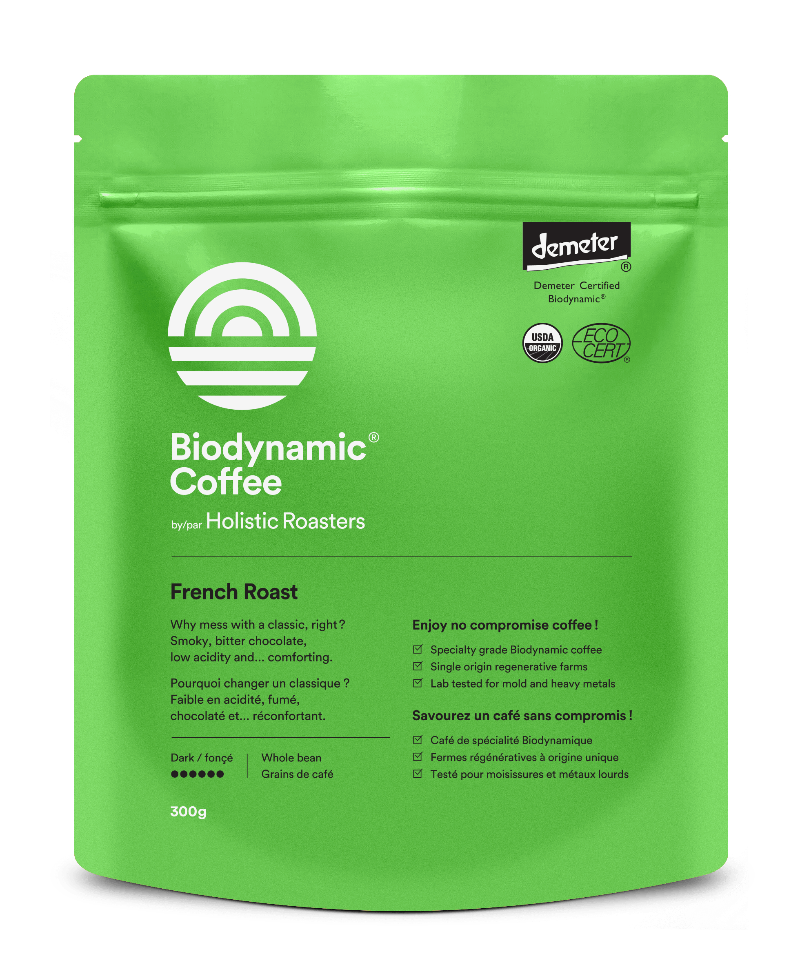
If your main concern is stomach comfort, perceived acidity, or being extra cautious around mineral-rich meals, a darker roast may be a better fit. For our smoothest, lowest-acidity option, we usually point people to our Biodynamic® French Roast. As a dark roast, it has a deeper profile, lower brightness, and a smoother finish that many people find easier on the stomach.
Should You Take Minerals With Coffee?
If you take mineral supplements, the best timing is usually away from coffee.
This is especially true for iron, particularly non-heme iron. For magnesium, calcium, zinc, and broader mineral formulas, the effect may be smaller, but taking them separately is still a sensible choice if absorption is the priority.
A simple routine works for most people:
- Drink coffee in the morning or between meals.
- Take mineral supplements with water later in the day, or at least one to two hours away from coffee.
It does not need to be complicated. For most people, it is simply a matter of not washing down mineral supplements with coffee.
The Bottom Line
Coffee does not meaningfully leach minerals from the body for most healthy people. The bigger issue is that coffee can reduce the absorption of certain minerals, especially non-heme iron, when consumed at the same time as meals or supplements.
Coffee also naturally contains small amounts of minerals, including potassium and magnesium, but it should not be relied on as a mineral supplement. For regular drinkers, moderate coffee contributes to hydration rather than depleting it, and it is unlikely to cause meaningful mineral loss in the context of a balanced diet.
Roast level may play a smaller role: lighter roasts retain more chlorogenic acids, while darker roasts contain less and often taste smoother. But if mineral absorption is your priority, timing matters more than roast level.
At Biodynamic Coffee, we do not add minerals to our coffee. Our focus is purity, careful sourcing, Biodynamic® and organic agriculture, and third-party lab testing. If you are specifically looking for mineral support, a balanced diet or a dedicated supplement taken away from coffee is the better approach. And if you want a smoother, lower-acidity cup, our Biodynamic® French Roast is a great place to start.
Frequently Asked Questions
Not in the dramatic sense the word suggests. Caffeine slightly raises the urinary loss of calcium and magnesium for a few hours, but healthy people who eat a balanced diet largely compensate. The more practical issue is absorption: coffee can reduce how much of certain minerals, especially non-heme iron, you absorb when you drink it with a meal or supplement.
Yes. Coffee can significantly reduce absorption of non-heme iron, the form in plants, fortified foods, and most supplements, when consumed with or shortly after the source. A classic study found a cup of coffee cut iron absorption from a meal by about 39%, and a 2023 trial in iron-deficient women found reductions of 50% or more. Heme iron from meat, poultry, and fish is much less affected.
It is better not to, especially for iron. Take iron and mineral supplements with water, ideally one to two hours away from coffee. Drinking coffee before a meal does not seem to hurt iron absorption, but drinking it with or right after does.
Yes. Brewed coffee provides small amounts of potassium and magnesium, plus trace minerals. It contributes to your intake but is not a substitute for a mineral-rich diet or a properly dosed supplement.
Possibly a little. Lighter roasts retain more chlorogenic acids, the polyphenols that can bind minerals, while darker roasts contain less and often taste smoother and less acidic. But timing matters more than roast level, especially for iron.
Probably not as a way to improve mineral status. Because coffee can interfere with the absorption of some minerals, it is not an ideal delivery vehicle. A dedicated supplement taken separately from coffee allows clearer dosing and better absorption.
If iron matters to you, keep coffee and iron about one to two hours apart. Research shows coffee taken with an iron-rich meal, or even an hour after it, sharply reduces non-heme iron absorption, while coffee taken an hour before the meal does not. The simplest approach is to have your coffee first and your iron later, or to wait one to two hours after an iron supplement or iron-rich meal before your next cup.
Not meaningfully for most people. Caffeine can raise urinary magnesium slightly for a few hours, but the net loss is small, tends to be smaller in regular coffee drinkers, and is easily offset by a balanced diet. Brewed coffee even supplies a little magnesium of its own. If you take a magnesium supplement, take it with water rather than coffee.
Clean Coffee, No Additives
We do not mineralize our coffee. We keep it clean: Biodynamic® and organic sourcing, careful roasting, and third-party lab testing for purity. For a smooth, low-acidity cup, start with our Biodynamic® French Roast.
Shop Biodynamic® French RoastThis article is for educational purposes only and is not medical advice. It is not intended to diagnose, treat, cure, or prevent any disease. If you have low iron, anemia, or another medical condition, or take supplements or medication, talk with a qualified healthcare provider about what is right for you.
References
- Morck, T. A., Lynch, S. R., & Cook, J. D. (1983). "Inhibition of food iron absorption by coffee." The American Journal of Clinical Nutrition, 37(3), 416-420. https://doi.org/10.1093/ajcn/37.3.416
- von Siebenthal, H. K., Moretti, D., Zimmermann, M. B., & Stoffel, N. U. (2023). "Effect of dietary factors and time of day on iron absorption from oral iron supplements in iron deficient women." American Journal of Hematology, 98(9), 1356-1363. https://doi.org/10.1002/ajh.26987
- Massey, L. K., & Whiting, S. J. (1993). "Caffeine, urinary calcium, calcium metabolism and bone." The Journal of Nutrition, 123(9), 1611-1614. https://doi.org/10.1093/jn/123.9.1611
- Kynast-Gales, S. A., & Massey, L. K. (1994). "Effect of caffeine on circadian excretion of urinary calcium and magnesium." Journal of the American College of Nutrition, 13(5), 467-472. https://doi.org/10.1080/07315724.1994.10718436
- U.S. Department of Agriculture, Agricultural Research Service. FoodData Central: Coffee, brewed. https://fdc.nal.usda.gov/