


How to Use a French Press: Step-by-Step to a Perfect, Sediment-Free Cup

The Quick Recipe: French Press in 6 Steps
The french press is the most forgiving brewer in coffee. There are no pouring patterns to master and no filter shapes to debate: coffee and hot water sit together, and time does the work. It is also the brewer most people quietly give up on, because their cup comes out muddy and gritty. That part is fixable, and this guide shows you exactly how.
The Bottom Line
Use a 1:15 coffee-to-water ratio, a coarse sea-salt grind, and 195–205°F water. Steep 4 minutes, break the crust and skim, wait 5–8 more minutes for the fines to settle, then plunge just below the surface and pour gently, leaving the last sip in the press. The waiting and skimming steps are what separate a clean, full-bodied cup from a gritty one. Total time: about 12 minutes, most of it hands-off.
coffee-to-water ratio by weight (33 g per 500 mL)
water temperature (90–96°C); off the boil ~30 seconds
steep time, plus an optional 5–8 minute settle for a sediment-free pour
sea-salt texture, roughly 750–1000 microns
🧰 What You'll Need
☕ The essentials
- A french press of any size (the chart below covers 3-cup through 12-cup)
- Fresh whole-bean coffee, ideally rested 5–14 days off roast
- Filtered water
⚙️ The difference-makers
- A burr grinder — for the french press, this matters more than the press itself (here's how to pick one)
- A kitchen scale for repeatable ratios
- Two spoons for the skim step you'll meet below
Which roast works best?
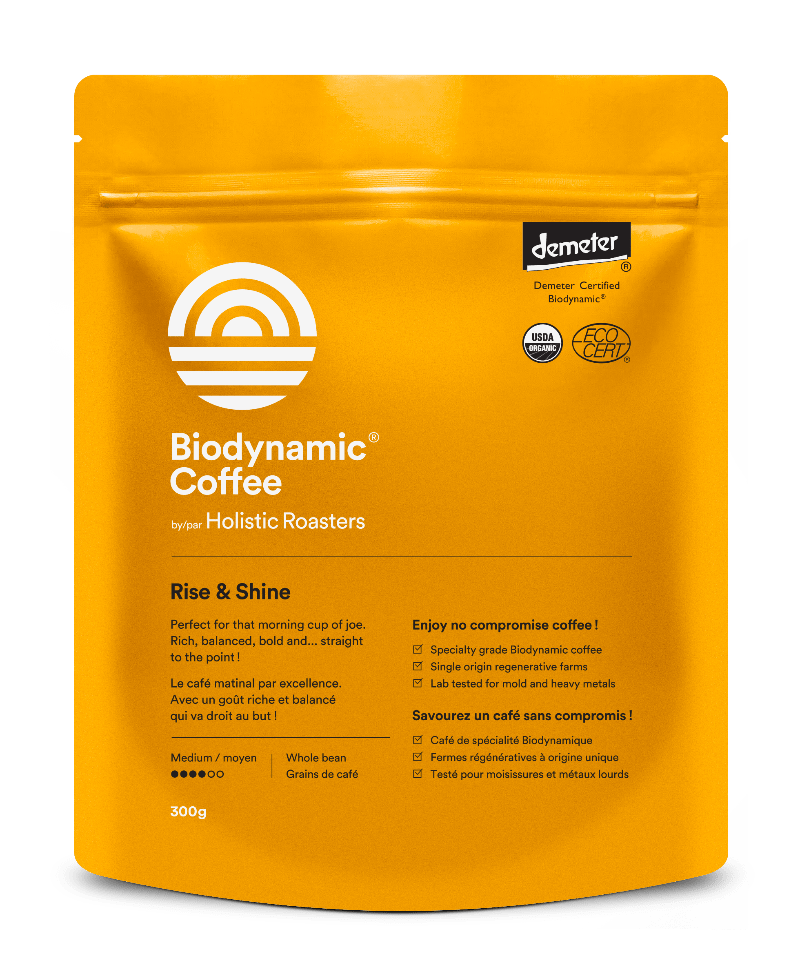
Full immersion flatters coffees with sweetness and body. Our medium roast Rise & Shine is the crowd-pleaser in a press, and our French Roast (the name is not a coincidence) delivers the classic deep, low-acid cup the method is famous for. Lighter roasts work too; grind one notch finer and extend the settle time.
🎯 Grind Size: Where Most Cups Go Wrong
The french press uses full-immersion brewing: grounds steep directly in the water, and a metal mesh holds them back when you plunge. That mesh is also the method's weakness. Unlike a paper filter, it lets fine particles and oils pass into the cup. The oils are welcome (they create the press's signature body); the fine particles are the grit.
Where French Press Sits on the Grind Spectrum
Target a coarse, even, sea-salt texture. Consistency matters as much as size.
This is why a burr grinder earns its keep here more than in any other method. Blade grinders chop unevenly, producing boulders and dust in the same batch. The boulders under-extract and the dust sails straight through the mesh into your cup. Our guide to grinding coffee covers the micron ranges for every method, and From Blades to Burrs will help you choose a grinder that fits your budget.
📋 The 6 Steps, Start to Finish

1. Heat your water to 195–205°F
Bring filtered water to a boil and let it rest about 30 seconds; that lands you in the 195–205°F (90–96°C) sweet spot without a thermometer. Pour a splash into the empty press to preheat it, swirl, and discard. A cold press steals heat from the brew and flattens extraction.

2. Weigh and grind coarse
Weigh your beans at a 1:15 ratio (33 g for a 500 mL press; full chart below) and grind to a coarse, sea-salt texture just before brewing. Pre-ground coffee works in a pinch, but it is usually ground for drip machines, which is one of the main reasons store-bought presses taste muddy.

3. Add coffee, pour all the water
Grounds in, timer on, then pour all your water in one steady stream. Give the slurry one gentle stir to make sure nothing stays dry. Rest the lid on top with the plunger pulled all the way up; it holds the heat in without disturbing the brew.

4. Steep 4 minutes, hands off
Walk away. Immersion brewing is self-limiting: the water cools as it extracts, so the brew won't turn bitter the way an over-stirred pour-over can. Four minutes is the standard; taste later cups and adjust 30 seconds either way to suit your roast.

5. Break the crust, then skim
At 4 minutes, a crust of grounds is floating on top. Stir it gently so it sinks, then take two spoons and skim off the foam and any grounds still floating. This step, popularized by coffee author James Hoffmann, removes the particles that would otherwise end up suspended in your cup.2 For the cleanest possible pour, now wait another 5–8 minutes while the fines settle to the bottom. The brew stays plenty hot, and the payoff is dramatic.

6. Plunge barely, pour gently
Here's the counterintuitive part: don't press the plunger to the bottom. Push it just below the surface of the liquid. The mesh now acts as a gate rather than a piston, and the settled fines stay undisturbed on the floor of the press. Pour slowly, and leave the last 30 mL or so behind. That sip is where the sediment lives.
📊 French Press Ratio Chart (Every Press Size)
French press "cups" are 4 oz nominal cups, not 8 oz mugs, which is why an "8-cup" press makes about four real mugs. The chart uses the 1:15 ratio; one level tablespoon of coarse grounds weighs roughly 6 g.
| Press size | Water | Coffee (1:15) | ≈ Tablespoons | Yields |
|---|---|---|---|---|
| 3-cup press | 350 mL / 12 oz | 23 g | ~4 tbsp | 1 large mug |
| 4-cup press | 500 mL / 17 oz | 33 g | ~5.5 tbsp | 2 mugs |
| 8-cup press | 1,000 mL / 34 oz | 67 g | ~11 tbsp | 4 mugs |
| 12-cup press | 1,500 mL / 51 oz | 100 g | ~17 tbsp | 6 mugs |
Like it stronger? Shift toward 1:12 (42 g per 500 mL). Lighter and tea-like? Try 1:17 (29 g per 500 mL). The Specialty Coffee Association's "Golden Cup" guidance centers on roughly 55 g per litre, right in this range.1 Change one variable at a time and keep notes; your perfect ratio is two or three brews away.
✨ The Sediment-Free Method, Explained
Everything above gives you a very good cup. This section is for people who love french press body but hate the silt at the bottom of the mug. Grit in the cup has exactly four sources, and each has a fix:
1. Fines from the grinder
Blade grinders (and worn burrs) create dust that passes straight through the mesh. Fix: a decent burr grinder set coarse. This single change removes most of the grit.
2. Plunging to the bottom
Pressing hard compacts the grounds and forces fine particles through and around the mesh. Fix: plunge just below the surface. The mesh only needs to separate your pour from the floating grounds.
3. Pouring too soon
Right after the steep, fines are still suspended in the liquid. Fix: the skim-and-settle wait. After breaking the crust and skimming, give the brew 5–8 quiet minutes; gravity pulls the fines to the bottom.
4. Chasing the last drop
The final ounce in the press is a sediment slurry. Fix: leave it. Pouring slowly and sacrificing the last 30 mL keeps the settled bed exactly where it belongs.
⚠️ Common Mistakes & Fixes
| Symptom | Likely cause | Fix |
|---|---|---|
| Gritty, muddy cup | Fine or uneven grind; plunging to the bottom | Burr grinder set coarse; plunge just below the surface; settle before pouring |
| Sour, thin, grassy | Under-extraction: water too cool, grind too coarse, steep too short | Use water just off the boil; grind one notch finer; add 30–60 seconds of steep |
| Bitter, harsh, drying | Over-extraction: grind too fine, or coffee left sitting on the grounds | Grind coarser; decant the whole brew after plunging instead of leaving it in the press |
| Tastes stale or flat | Old or pre-ground coffee | Whole beans, ground minutes before brewing, within a few weeks of the roast date |
| Lukewarm coffee | Cold press, long settle in a thin glass beaker | Preheat with hot water; for long settles, a double-wall or insulated press holds temperature |
| Great first cup, bitter second | Coffee kept steeping on the grounds in the press | Pour or decant everything once brewed; the extraction never truly stops |
🧮 Find Your Recipe by Press Size
Select your press and get the exact recipe:
Select Your French Press:
Frequently Asked Questions About French Press Coffee
1:15 by weight is the reliable starting point: 1 g of coffee for every 15 g (mL) of water. In practice:
- 3-cup press (350 mL): 23 g (~4 tbsp)
- 4-cup press (500 mL): 33 g (~5.5 tbsp)
- 8-cup press (1 L): 67 g (~11 tbsp)
- 12-cup press (1.5 L): 100 g (~17 tbsp)
Move toward 1:12 for a stronger cup or 1:17 for a lighter one, changing one variable at a time.
4 minutes is the standard steep. For a noticeably cleaner cup, break the crust at 4 minutes, skim the foam, then wait another 5–8 minutes before pouring so the fines settle. Immersion brews cool as they extract, so the extra wait will not make the coffee bitter; just preheat the press so the cup stays hot.
Coarse, like sea salt (roughly 750–1000 microns). Consistency matters as much as size: blade grinders produce dust alongside boulders, and the dust is what slips through the metal mesh and turns the cup muddy. A burr grinder set coarse is the single biggest upgrade you can make to french press coffee. See our full grind size guide for the micron ranges of every brew method.
195–205°F (90–96°C), in line with the SCA's brewing guidance.1 No thermometer? Boil the water and let it sit about 30 seconds before pouring. Cooler water under-extracts toward sourness; a rolling boil poured directly on the grounds pushes the brew bitter, especially with darker roasts.
Grit has four sources, and most muddy cups involve at least two of them:
- Grind dust from a blade grinder or worn burrs
- Plunging to the bottom, which forces fines through the mesh
- Pouring immediately, while fines are still suspended
- Draining the press completely, including the sediment slurry at the bottom
The fixes: burr grinder set coarse, plunge just below the surface, wait 5–8 minutes after skimming, and leave the last 30 mL in the press.
It tastes stronger because the metal mesh lets coffee oils and micro-fine particles into the cup, creating a heavier body and rounder texture than paper-filtered drip. Caffeine, though, is similar at the same ratio: roughly 80–100 mg per 8 oz cup. If you want a genuinely stronger brew, tighten the ratio toward 1:12 rather than steeping longer.
For most people, no. One nuance worth knowing: unfiltered brews (french press, Turkish, boiled) retain cafestol, a diterpene that paper filters trap. A meta-analysis of controlled trials found unfiltered coffee raises cholesterol in a dose-dependent way, driven mainly by heavy daily intake.3 At 1–2 cups a day the effect is modest for most healthy people. If you drink five or more cups daily or are managing high LDL, make some of them paper-filtered and keep the press as your ritual brew. For the full picture across every filter type, see how metal, cloth, and paper filters compare on the cholesterol trade-off. The quality of the beans matters too; our coffee is lab-tested every harvest for mold, mycotoxins, and heavy metals.
Yes, and it is one of the easiest cold brew setups there is. Use a 1:4 ratio for concentrate (200 g coarse grounds to 800 mL cold water in an 8-cup press), steep 14–18 hours in the refrigerator, then plunge gently and decant. Dilute 1:1 with water or milk to serve. Our cold brew mastery guide covers ratios, steep times, and flavor tweaks in depth.
After each brew: add a little water, swirl, and dump the grounds into the compost rather than the sink. Rinse all parts well. Weekly: unscrew the plunger assembly (mesh screen, spring plate, crossplate) and wash each piece, since trapped oils go rancid and make every future brew taste stale. A monthly soak in a coffee-specific cleaner or a baking soda solution keeps the mesh and beaker fresh.
☕ A Press Deserves Beans Worth Pressing
The french press hides nothing. With no paper filter in the way, you taste everything in the bean, which is exactly why it rewards clean coffee. Holistic Roasters' Biodynamic Coffee is Demeter-certified and lab-tested every harvest for mold, mycotoxins, and heavy metals, then roasted fresh in small batches.
Shop Lab-Tested Biodynamic CoffeeReferences & Further Reading
- Specialty Coffee Association. "Golden Cup Standard" and coffee brewing best practices (brew ratio and water temperature guidance). sca.coffee/research/protocols-best-practices
- Hoffmann, J. (2020). "The Ultimate French Press Technique." YouTube; see also Hoffmann, J. (2022). How to Make the Best Coffee at Home. Mitchell Beazley.
- Jee, S. H., He, J., Appel, L. J., Whelton, P. K., Suh, I., & Klag, M. J. (2001). "Coffee consumption and serum lipids: a meta-analysis of randomized controlled clinical trials." American Journal of Epidemiology, 153(4), 353–362. doi: 10.1093/aje/153.4.353 | PubMed
- U.S. Food & Drug Administration. "Spilling the Beans: How Much Caffeine is Too Much?" FDA Consumer Update. fda.gov