



A Gentler Cup: Coffee and Reflux, What 40 Studies Found


What You'll Learn
If coffee sometimes leaves you with heartburn, you've probably been told to cut back or quit. In 2026, a team of gastroenterologists pooled decades of research to answer a simple question: are coffee drinkers really more likely to have acid reflux? The answer was yes, but only slightly, and the details matter more than the headline.
The Quick Scoop
A 2026 review of 40 studies and more than 122,000 people found reflux (GERD) was slightly more common in coffee drinkers: 34.9% versus 30.7% in non-drinkers. The authors called the effect small and of unclear clinical significance, and found no link to Barrett's esophagus. If coffee bothers your stomach, two easy adjustments may help: keep it to a few cups a day, and choose a darker roast, which early research suggests stimulates less stomach acid.
What the 2026 Review Found
The study, published in Clinical and Translational Gastroenterology, is what its authors describe as the most comprehensive meta-analysis on coffee and GERD to date. Researchers combined 40 observational studies, comparing reflux rates in coffee drinkers and non-drinkers. GERD was defined by typical symptoms (heartburn or regurgitation), validated questionnaires, or signs of erosive esophagitis on endoscopy.
studies pooled for the main analysis, with much of the research published since the last comprehensive review
people included: 85,400 coffee drinkers and 36,674 non-drinkers
pooled odds ratio for GERD in coffee drinkers, a small but statistically significant increase
How Common Was Reflux?
Coffee drinkers:
Non-drinkers:
Pooled GERD rates from the 2026 meta-analysis (Muftah et al.). Bars scaled to 50%.
In plain terms: reflux is common whether or not you drink coffee, and coffee drinkers had it a little more often. The review also looked at Barrett's esophagus, a complication of long-term reflux, and found no significant association with coffee.
What the Research Doesn't Say
Headlines tend to flatten studies like this one. Here's what the paper does and doesn't support:
| Common Takeaway | What the Review Actually Found |
|---|---|
| "Coffee causes reflux" | All 40 studies were observational, so they show an association, not cause and effect. Most weren't focused on coffee alone and looked at many lifestyle factors at once. |
| "Everyone with GERD should quit coffee" | The authors concluded that routinely telling GERD patients to cut or avoid coffee as a universal rule needs further evaluation. |
| "There's a safe number of cups" | There wasn't enough data to run a dose analysis, and no clear consumption threshold was identified. |
| "Coffee damages your esophagus" | No significant association was found between coffee and Barrett's esophagus. |
The researchers also noted wide variation between the studies they combined, which is common when pooling decades of research from different countries and methods. The finding is real, but modest.
Two Easy Adjustments That May Help
If coffee does seem to bother you, there's no need to give it up before trying a couple of simple changes.
Watch How Much You Drink
The 2026 review couldn't pin down a cutoff, but other research suggests amount matters:
Risk rose with each extra cup
In the Nurses' Health Study II, which followed more than 48,000 women over time, the risk of reflux symptoms rose with each additional daily serving of coffee.
Symptoms climbed past about four a day
A 2024 Italian study of GERD patients found symptoms got worse as coffee intake went up, particularly once people drank more than four cups a day.
Try this: if you're drinking four or more cups a day and dealing with heartburn, cut back to two or three and see how you feel.
Choose a Darker Roast
Roasting changes coffee's chemistry, and some of those changes may matter for your stomach. Darker roasts form more of a compound called N-methylpyridinium (NMP) and keep less of the C5HTs, compounds shown to stimulate stomach acid.
In a small human study, a dark roast blend stimulated less stomach acid than a medium roast market blend, even with similar caffeine. See the chemistry below.
Try this: swap your usual coffee for a dark roast for a couple of weeks and notice the difference.
Small Brewing Tweaks
Brewing method, grind size, water temperature, and filtration all affect how acidic your cup tastes. Cold brew, a slightly coarser grind, and paper filters are popular ways to make a smoother, gentler cup.
We cover all of them in our guide on how to reduce acid in coffee.
Why a Darker Roast May Be Gentler
Coffee contains compounds that push stomach acid up and others that seem to calm it down. A research group at the Technical University of Munich and the University of Vienna spent years sorting out which is which.
In stomach-cell experiments, NMP, a compound that forms only during roasting, down-regulated key mechanisms of acid secretion. Darker roasting produces more NMP and less of the C5HTs, compounds that stimulated acid secretion in the same research.
The team then tested it in people. Nine healthy volunteers drank either a dark roast blend or a medium roast market blend. The dark roast stimulated less stomach acid secretion.
Dark vs. Medium: What Changed
Measured in the brewed coffee from the 2014 human study:
- NMP: 87 mg/L in the dark roast vs. 29 mg/L in the medium roast
- C5HTs: 0.012 mg/L vs. 0.343 mg/L
- Chlorogenic acids: 323 mg/L vs. 1,126 mg/L
- Caffeine: similar in both
Same caffeine, different chemistry, and less acid stimulated.
A note on light roasts
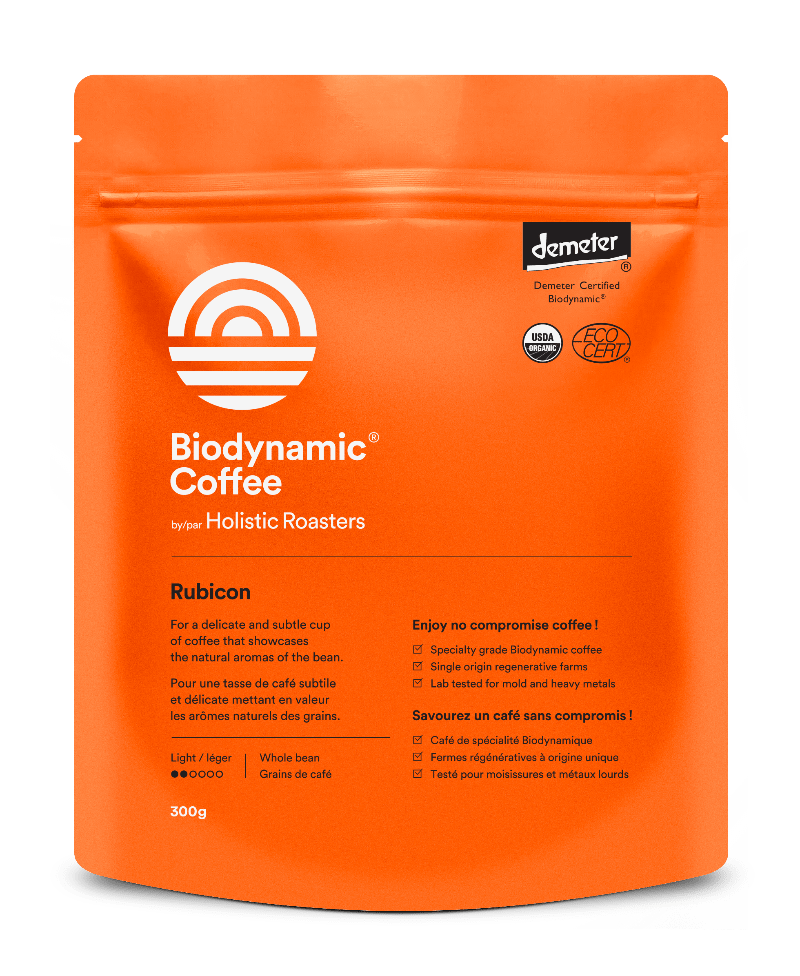
Darker roasting also lowers chlorogenic acid, the antioxidant behind many of coffee's health benefits, and the reason we love light roasts like Rubicon (read more in our chlorogenic acid guide). So it's a trade-off: lighter roasts keep more antioxidants, and darker roasts may be easier on a sensitive stomach. Pick the one that fits what your body needs.
A fair caveat: the human study was small, used healthy volunteers, and measured acid secretion rather than reflux symptoms. It's promising early evidence, not proof that dark roast prevents reflux.
The Honest Read
What We Take From the Research
- Coffee drinkers had slightly more reflux, but the effect was small and its real-world significance is unclear.
- Coffee wasn't linked to Barrett's esophagus.
- No coffee is a treatment for reflux. If you have frequent heartburn or GERD, talk to your doctor.
- If coffee bothers you, keeping it to a few cups and switching to a darker roast are easy, low-risk things to try.

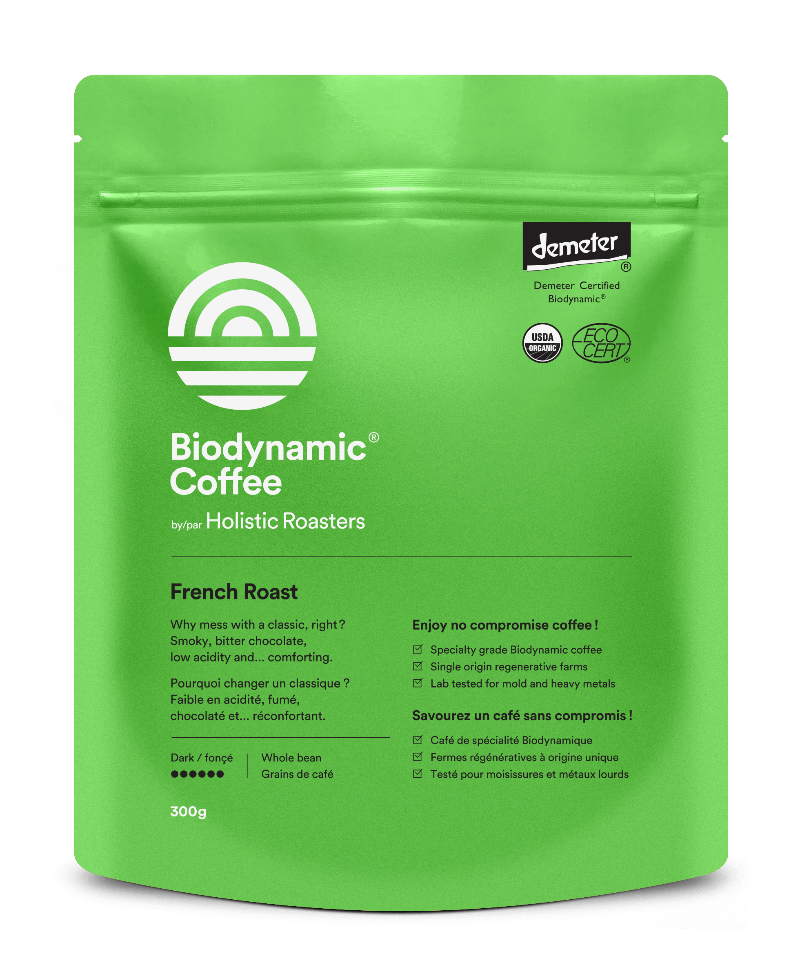
Our Darkest Roast: French Roast
French Roast is the darkest coffee we make, with the lowest perceived acidity of our range. Expect smoky, bitter-chocolate notes and a creamy, comforting cup that works for filter, French press, and espresso. Like every Biodynamic Coffee, it's Demeter Certified Biodynamic and lab-tested every harvest.
The research above looked at dark roasts in general; we haven't measured NMP in our own coffee.
"Excellent coffee. Smooth, flavourful, yet gentle on the stomach."
Andrea D., Verified Buyer
Frequently Asked Questions
A 2026 meta-analysis of 40 studies found GERD was slightly more common in coffee drinkers (34.9%) than non-drinkers (30.7%). The studies were observational, so they show an association rather than proof that coffee causes reflux, and the authors described the clinical significance of the effect as unclear.
Not necessarily. The authors of the 2026 review concluded that telling every GERD patient to cut or avoid coffee needs further evaluation. Many people do notice coffee as a personal trigger, so pay attention to how you feel and talk to your doctor about what's right for you.
There's no single number. The 2026 review didn't have enough data to identify a threshold. Separately, a large US cohort found reflux symptom risk rose with each additional daily serving of coffee, and a 2024 Italian study found symptoms in GERD patients worsened as intake went up, especially above four cups a day. Keeping it to a few cups is a sensible place to start.
Early research points that way. Dark roasting creates more N-methylpyridinium (NMP), a compound that dampened acid-secretion signals in stomach cell studies, and leaves fewer C5HTs, compounds that stimulate it. In a small study of nine healthy volunteers, a dark roast blend stimulated less stomach acid than a medium roast. It's promising but not proof that dark roast prevents reflux.
The 2026 meta-analysis found no significant association between coffee intake and Barrett's esophagus, a complication of long-term reflux.
Sources
- Muftah M, McCarty TR, Hartnett D, Flanagan R, Hiramoto B, Chan WW. Association of Coffee Intake With Risk of Gastroesophageal Reflux Disease and Complications: A Systematic Review and Meta-Analysis. Clinical and Translational Gastroenterology. 2026;17(4):e00996. Read the study
- Mehta RS, Song M, Staller K, Chan AT. Association Between Beverage Intake and Incidence of Gastroesophageal Reflux Symptoms. Clinical Gastroenterology and Hepatology. 2020;18(10):2226–2233.
- Franzoni L, Crafa P, Franceschi M, et al. Coffee intake and gastroesophageal reflux: Relationship with clinical, endoscopic and functional features. Acta Biomedica. 2024;95(5):e2024127. Read the study
- Rubach M, Lang R, Bytof G, Stiebitz H, Lantz I, Hofmann T, Somoza V. A dark brown roast coffee blend is less effective at stimulating gastric acid secretion in healthy volunteers compared to a medium roast market blend. Molecular Nutrition & Food Research. 2014. doi:10.1002/mnfr.201300890
- Rubach M, Lang R, Seebach E, Somoza MM, Hofmann T, Somoza V. Multi-parametric approach to identify coffee components that regulate mechanisms of gastric acid secretion. Molecular Nutrition & Food Research. 2012.
This article is for general information and isn't medical advice. If you have frequent heartburn or have been diagnosed with GERD, talk to your doctor.