



Brew Better with a Coffee Scale: Dial In Espresso, AeroPress, French Press & Drip at Home


What You'll Learn About Brewing with a Coffee Scale
Brew Better with a Coffee Scale
You can buy great beans, grind them fresh, and nail your water temperature, and still end up with a cup that tastes great on Monday and flat on Tuesday. Nine times out of ten, the difference isn't the coffee. It's the measuring.
A coffee scale is the quiet tool behind every consistent café cup. It turns "a scoop or two" into an exact recipe you can repeat, tweak, and repeat again. Whether you pull espresso at home, brew a single cup in an AeroPress, make a pot in a French press, or run your filter or drip brewer every morning, weighing your coffee and water is the single fastest way to brew better coffee. And the good news: it doesn't take an expensive scale to do it.
The Quick Scoop
Scoops measure volume, but coffee changes density with roast and grind, so the same scoop won't always hold the same amount of coffee. A scale lets you weigh your coffee, your water (or your espresso shot), and track your time, so every brew is repeatable. Once your weights are locked, you can change one thing at a time, usually grind size, and actually taste what that change did. A simple, accurate scale with a timer is all most home brewers need.
Scoops vs. Grams: Why Volume Lets You Down
A scoop or tablespoon tells you how much space your coffee takes up, not how much coffee is actually there. That gap matters more than most people expect:
Roast changes density
Beans lose moisture and expand as they roast, so darker roasts are lighter and puffier than lighter roasts. A level scoop of a dark roast typically holds less coffee by weight than the same scoop of a light roast.
Grind changes packing
Fine grounds pack tighter than coarse ones. Switch grind sizes, or switch from whole bean to ground, and the weight hiding in your scoop shifts with it.
Hands aren't repeatable
Heaped, level, or tapped? Every scoop is a little different. A difference of a couple of grams is enough to move a small brew from balanced to weak, or from sweet to bitter.
The same goes for water. Kettle markings and measuring cups are rough at best, and you can't read them while you pour. On a scale, water is simple: 1 ml of water weighs about 1 gram, so you just tare and pour to the number.
How a Scale Dials In Each Brew Method
Every method rewards precision a little differently. Here's what the scale is doing for you in each one, along with a proven starting recipe.
Espresso: Where the Scale Matters Most
Espresso is the least forgiving method at home. You're forcing water through a small, tightly packed puck in under half a minute, so a fraction of a gram in the basket or a few grams in the cup can change the shot noticeably.
What the scale does: weigh your dose before it goes in the portafilter, then set the cup on the scale and weigh the liquid shot as it pulls, using the timer to see how long it takes. That gives you two numbers (yield and time) to steer by. Shot running fast and tasting sour? Grind finer. Running slow and tasting bitter? Grind coarser. Keep the dose and yield the same while you adjust.
AeroPress: Small Brew, Small Margins
The AeroPress makes a single cup, which means the margins are small. Two extra grams in a 14g dose is roughly a 14% stronger cup. Weighing makes this forgiving brewer even more consistent.
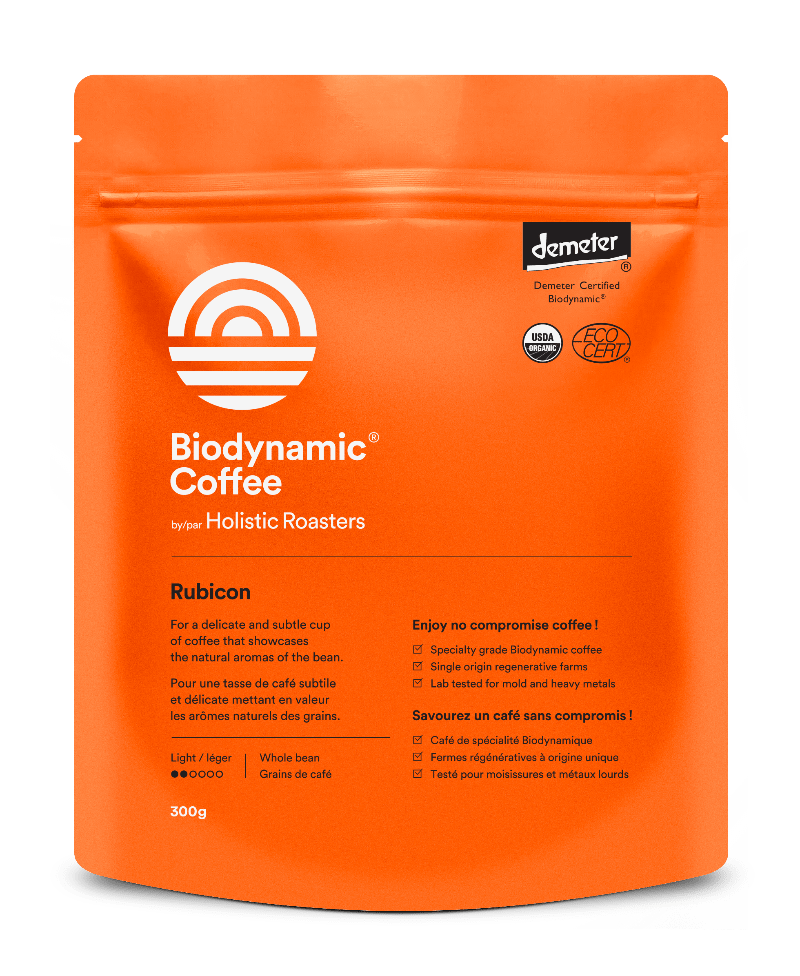
What the scale does: set the AeroPress and mug right on the scale, tare, and you can hit your 45g bloom and 200g total pour exactly, while the timer keeps your steep and press on track. For our full house method with Rubicon, see our step-by-step glass AeroPress guide.
French Press: Repeatable Body and Strength
The French press is forgiving on technique, but the ratio still decides how strong and how full the cup tastes. It's also where scoop-counting drifts the most, because you're measuring a lot of coffee at once.
What the scale does: weigh beans at 1:15, then pour all your water by weight with the press on the scale. Like it stronger? Move toward 1:12. Lighter? Try 1:17. Because your weights are exact, you'll know the change you tasted came from the ratio, not a heavy scoop. The full method, including the skim-and-settle trick, is in our French press guide.
Filter / Drip: The Everyday Brew, Made Consistent
Whether you use a drip coffee maker or a pour-over cone, filter coffee is the daily cup for a lot of households. It's also where scoops drift the most, because you're usually brewing a full pot, and small errors per scoop add up across the whole batch.
What the scale does: for a drip machine, weigh your coffee into the basket and weigh the water before it goes into the reservoir, so every pot comes out the same strength. For pour-over, brew on the scale and pour to your target weight as you go. A 1:16 ratio is a balanced starting point; tighten it toward 1:15 for a stronger cup or loosen it toward 1:17 for a lighter one. Prefer pour-over? Our pour-over guide walks through the full method.
Buying pre-ground Filtre/Drip? The scale matters just as much. Pre-ground coffee packs differently than whole beans, so weighing your dose is the only way to know how much is actually going into the filter.
Coffee Ratio Calculator
Pick your method and how much coffee you're using, and we'll give you the water (or espresso yield) to aim for on the scale.
Find Your Numbers
Water to pour: 200 g
Ratio: 1:14.3
Target time: ~2:00 total
These are starting points. Once you've brewed a few cups, adjust to taste and keep notes.
How to Dial In Any Recipe in 5 Steps
"Dialing in" just means adjusting your recipe until it tastes the way you like, then keeping it there. A scale is what makes that possible, because it holds everything steady except the one thing you're testing.
Use one of the recipes above as your baseline. Don't chase perfection on the first cup; you need a reference point to compare against.
Tare your container and weigh whole beans before grinding. It's the most accurate way to hit your dose and keeps you from wasting ground coffee.
Brew directly on the scale. Tare, start the timer, and pour to your target, or for espresso, stop the shot when the cup reaches your yield.
Note your dose, water or yield, grind setting, and time. A quick note on your phone is enough. This is how good cups become repeatable ones.
Adjust a single variable for the next brew, usually grind size first. Keep the weights identical so you can taste exactly what changed.
What Your Cup Is Telling You
| Tastes like | Usually means | Try this (weights unchanged) |
|---|---|---|
| Sour, sharp, thin | Under-extracted | Grind finer, or extend brew time slightly |
| Bitter, harsh, drying | Over-extracted | Grind coarser, or shorten brew time slightly |
| Watery, weak | Too little coffee for the water | Tighten the ratio (more coffee or less water) |
| Heavy, overpowering | Too much coffee for the water | Loosen the ratio (less coffee or more water) |
You Don't Need an Expensive Scale
Coffee scales range from basic kitchen models to premium connected ones with apps and flow-rate graphs. Those extras can be fun, but they aren't what makes your coffee better. Consistency comes from weighing every time, and a modestly priced scale does that just as well.
What actually matters
- Accurate, quick readings so the number keeps up with your pour
- A built-in timer, so you're not juggling your phone
- A tare button to zero out your cup or brewer
- The right size to fit your brewer, or under your espresso drip tray
- 0.1g resolution if you pull espresso; whole grams are fine for French press and drip
What's nice to have
- Bluetooth and companion apps
- Flow-rate tracking and brew graphs
- Auto-start timers and multiple brew modes
- Premium materials and finishes
None of these will fix an inconsistent recipe on their own. Weighing will.
The Real Upgrade Is the Habit
The biggest jump in quality comes the first time you stop scooping and start weighing. After that, the habit of tracking your dose, water, and time does more for your cup than any premium feature. Spend on fresh beans and a good burr grinder first; the scale just needs to be accurate and easy to use.
Our Pick: Timemore Black Mirror Basic 2
This is the scale we stock for home brewers who want reliable results without overspending.

Timemore Black Mirror Basic 2
$54.00
A sleek, minimalist scale that's lightweight and accurate, made for precisely measuring coffee for perfectly timed shots and brews. It handles temperatures up to 100°C, and comes with a silicone mat and a USB-C charging cable.
It's everything this guide asks of a scale, at a price that leaves room in the budget for good beans.
Shop the Timemore ScaleFrequently Asked Questions About Coffee Scales
If you want the same great cup more than once, yes. Scoops measure volume, and coffee varies in density by roast and grind, so the same scoop can hold a different amount of coffee from one bag to the next.
A scale takes the guesswork out of your dose and your water, which makes your recipe repeatable and lets you change one variable at a time when dialing in.
Accurate readings, quick response when you pour, a built-in timer, a tare button, and a size that fits your brewer or under your espresso machine's drip tray. For espresso, 0.1g resolution is helpful; for French press, AeroPress, and drip, readings to the gram are enough.
App connectivity and flow-rate graphs are nice extras, not requirements.
For French press and other larger batches, a kitchen scale that reads in single grams works well. It becomes limiting for espresso, where small changes in dose matter and you want to weigh the shot as it pulls, and for any method where a built-in timer saves you juggling a phone.
Weigh it in grams. One milliliter of water weighs about one gram, so the numbers line up, and weighing directly on the scale as you pour is far more accurate than reading a measuring cup or the lines on a kettle.
The usual culprit is measuring by scoop or by eye. Small differences in dose and water change the strength and extraction of the cup.
Weighing both every time, along with keeping grind size and water temperature steady, is the fastest way to make your coffee taste the same every morning.
Ready to Brew the Same Great Cup Every Time?
The Timemore Black Mirror Basic 2 is the simplest upgrade you can make to your home setup. Weigh your coffee, weigh your water, and start dialing in your espresso, AeroPress, French press, or drip recipe tomorrow morning.
Biodynamic Coffee subscribers get an extra 10% off all brewing gear.